
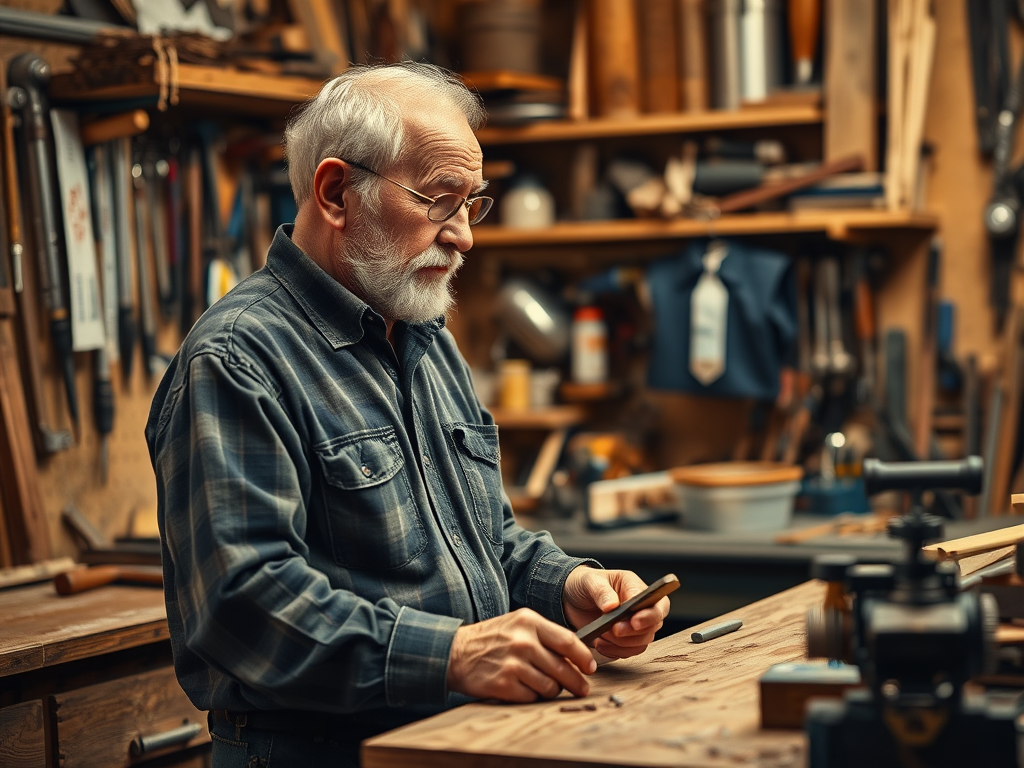
John is not just thinking about moving to a smaller home, he’s wrestling with the reality that downsizing means rethinking a lifetime of building, fixing, crafting, and tinkering. His house is big, but his shop is where the heartstrings and hobbies are really attached.
If you’ve got a fully outfitted workshop on your property, whether woodworking, automotive, or a bit of everything, downsizing isn’t just a matter of packing boxes. It’s letting go of tools, materials, and memories that represent identity, capability, and independence.
Men like John often discover that downsizing challenges go far beyond floor plans and closet space. When your shop has always been your go-to place for solutions, creativity, or solitude, the thought of giving it up can feel like losing a piece of yourself.
The Weight of What We Keep
Walk into John’s shop and you’ll find more than tools; you’ll find a lifetime of projects and a library of possibilities:
- Woodworking essentials: chisels, saws, a band saw, jointer, planer, routers, drill presses, and that dust collection system that finally stopped clogging once he really dialed it in.
- Automotive gear: jacks, brake rotors, spark plugs, alternators, belts, and hoses, because who doesn’t need to rebuild a starter “just in case”?
- The everyday tools: screwdrivers, nail guns, and equipment tucked in drawers that haven’t been opened since that one project in 2012.
Tools like these don’t just take up space, they hold purpose. They’ve repaired homes, rebuilt friendships, restored classic cars, and made countless gifts that still sit proudly on family mantels.
Why Downsizing the Shop Feels Different
For many men, the shop isn’t just a room, it’s a refuge. It’s where you:
- solved problems with your hands
- escaped the noise of life
- learned new skills
- passed on knowledge
- fixed what others gave up on
Selling a table saw may sound simple until you remember the projects built on it, the weekends spent with sawdust in your hair, and the satisfaction of turning a rough piece of lumber into something meaningful.
Downsizing forces the question: “What do I still need, and what do I simply like having?”
And that’s a tough distinction when the shop has always been your toolbox for possibility.
Where to Begin When the Shop Is a Bigger Priority Than the House
John’s starting with a plan, because walking into the shop and randomly choosing what stays and what goes is a recipe for emotional exhaustion (and possibly a stubbed toe).
Here’s what helps:
- Identify what you truly use today
If it hasn’t left the drawer or shelf in two years, it might not need to follow you to the next chapter. - Keep tools that support your future lifestyle
A smaller home may mean fewer large-scale projects, but there’s still joy in fixing, shaping, and creating but on a more reasonable scale. - Pass tools on with purpose
Gifting a beloved tool to someone who will use it can feel far better than selling it for a fraction of its worth. - Preserve memories without preserving everything
Photos of past builds, notes from projects, or even a single well-chosen tool can carry meaning without taking up a garage-worth of space.
Letting Go Doesn’t Mean Giving Up
John isn’t losing his identity as the guy who can fix anything, he’s adapting it. Downsizing doesn’t mean closing the door on what’s defined you. It’s creating space, physically and mentally for the next version of yourself.
Maybe the next shop will be smaller. Maybe the projects will be more refined. Maybe there will be more time to sit back and enjoy what you’ve built instead of constantly planning the next undertaking.
Plenty of Great Memories
Downsizing a workshop is one of the hardest steps in the journey toward a simpler future, especially for those who’ve spent a lifetime with tools in hand. But like any good project, the key is taking it one piece at a time, thoughtfully, intentionally, and with respect for what the shop has meant.
John knows it’s time. And while the dust collection system might not make the move, the skills, memories, and satisfaction certainly will.
Because at the end of the day, the shop may be shrinking, but the legacy of what was built there doesn’t have to.
Jeff Sefton
Downsizing Freedom
